
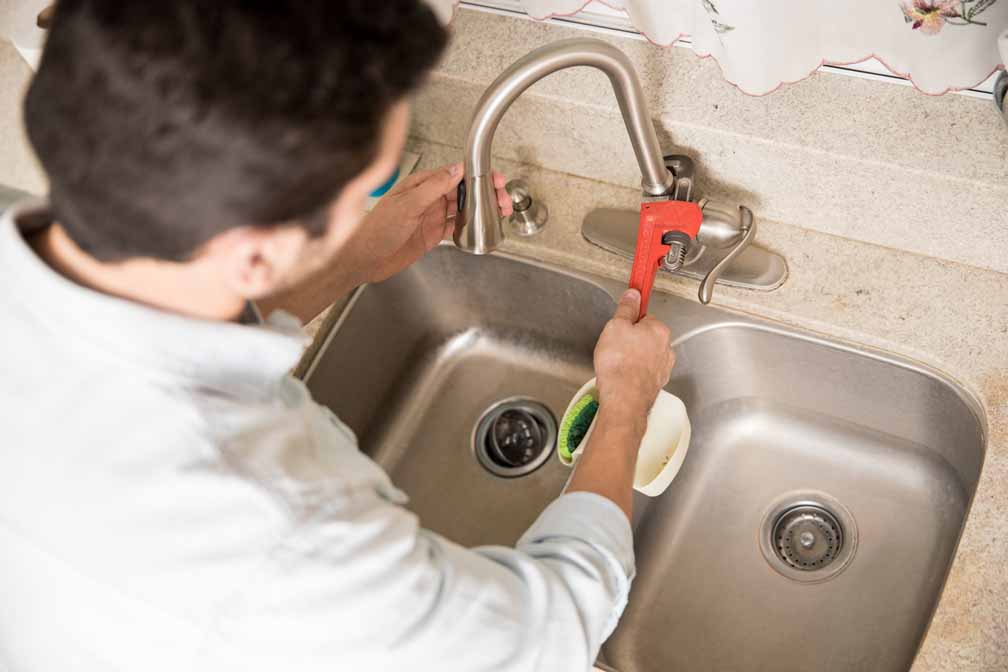
Closeup of plumber fixing a faucet
SEO For Plumbers: How To Rank Higher Locally And Turn Searches Into Service Calls
When someone’s basement is flooding, they don’t browse for fun. They search fast, tap one of the top results, and call. That’s exactly why SEO for plumbers matters so much today: local visibility now decides who gets the job before a competitor even answers the phone.
In most cities, plumbers aren’t just competing on skill or pricing. They’re competing on Google Business Profile visibility, service-page relevance, review quality, website trust signals, and technical performance. And in crowded local markets, small ranking improvements can turn into a steady stream of emergency calls, installation requests, and booked estimates.
At Divramis, our plumbing SEO company team has spent over a decade helping roofing companies, contractors, and local home-service businesses climb Google’s rankings with white-hat strategies, transparent reporting, and measurable lead growth.
We’ve seen this pattern across competitive service industries: when a site aligns with local search intent and removes friction, rankings improve, and so do leads. In this guide, we’ll walk through the practical plumbing SEO strategies that help local companies rank higher, attract better traffic, and convert searches into real service calls.
Why SEO Matters For Plumbing Businesses In Competitive Local Markets
Plumbing is one of the highest-intent local service categories in search. People rarely look up a plumber casually. They search because something is leaking, clogged, broken, or urgently needs replacing. That makes organic search traffic unusually valuable.
The challenge is that local SERPs are crowded. A typical search for “emergency plumber near me” may show ads, the map pack, and a handful of strong organic listings before a smaller company gets any visibility at all. If your business isn’t appearing in those places, you’re invisible during the exact moment someone is ready to book.
Good SEO helps fix that. It strengthens your visibility across the map pack and organic listings, improves trust signals before a user even clicks, and supports long-term lead generation without paying for every visit. Unlike short-term campaigns, strong local SEO compounds over time.
For plumbing businesses, that often means more than just traffic. It means more calls from homeowners in your service area, better-quality leads, and less dependence on third-party lead platforms that eat into margin.
How Local Search Intent Drives Plumbing Leads
Local intent is the engine behind plumbing SEO. Searchers usually include a service, location, or urgency cue in the query: “water heater repair Athens,” “drain cleaning near me,” “24 hour plumber,” or “pipe leak repair Glyfada.”
Those searches tell us two things. First, the user knows what they need. Second, they want a provider nearby. So Google favors businesses with clear local relevance, strong proximity signals, complete business profiles, and pages that match the service requested.
That’s why generic websites struggle. If your site talks broadly about plumbing but doesn’t clearly cover drain cleaning, sewer repair, water heater installation, and each city or neighborhood you serve, Google has less confidence in where to rank you. Specificity wins.
Build A Plumbing Website That Google And Customers Trust
A plumbing website has two jobs: reassure people quickly and help Google understand exactly what you do and where you do it. If either part fails, rankings and conversions suffer.
Trust starts with the basics. Your site should clearly display your phone number, service areas, hours, core services, licensing details where relevant, and proof that you’re a legitimate local business. Include real team photos when possible, not just stock images of a smiling technician with a wrench. People can usually tell.
Read more: Eleven SEO trends that still move the needle today
From Google’s perspective, structure matters. Keep your navigation simple. Give each major service its own page. Make location information consistent across the site. Add clear title tags and meta descriptions. And write copy that sounds like an expert plumber talking to real customers, not vague marketing filler.
We also recommend highlighting credibility signals early on the page:
- Reviews and testimonials
- Years in business
- Emergency availability
- Financing or warranty information
- Service guarantees
- Before-and-after project examples
For businesses in competitive niches, we often see a trust gap between ranking and converting. A decent site might get clicks, but a strong site gets calls. That’s the difference. If the website feels outdated, thin, or generic, visitors hesitate. If it feels trustworthy, local, and useful, they move.
Optimize Your Google Business Profile For More Calls And Map Pack Visibility
For plumbers, Google Business Profile is often the most important local SEO asset after the website itself. In many searches, the map pack gets more attention than traditional organic results, especially on mobile.
A well-optimized profile increases your chance of appearing for local service searches and can drive calls directly without the user ever visiting your site. That’s powerful, but only if the profile is complete and actively managed.
Start with the fundamentals:
- Use your real business name consistently
- Choose the most accurate primary category, usually Plumber
- Add relevant secondary categories like Drainage service or Water heater installation service where appropriate
- List correct hours, including emergency availability if you offer it
- Upload high-quality photos of your team, vans, jobs, and office
- Write a concise, keyword-aware business description
Then go further. Add services individually. Publish updates occasionally. Answer questions in the Q&A section. And make sure the linked landing page matches the services and areas you want to rank for.
Reviews play a big role here too. A profile with strong ratings, recent reviews, and active owner responses sends both trust and relevance signals. If two plumbers are close in proximity, the stronger profile often wins the click.
Read more: Fifteen Google SEO ranking factors that still matter
Target The Right Plumbing Keywords For Every Service And Service Area
One of the biggest SEO mistakes plumbers make is trying to rank a homepage for everything. That usually leads to weak relevance. Instead, we want a keyword strategy built around service intent + local intent.
Start by separating your terms into practical groups:
- Core services: plumber, plumbing company, plumbing repair
- Emergency terms: emergency plumber, 24 hour plumber, urgent pipe repair
- Specific services: drain cleaning, water heater repair, sewer line replacement, leak detection, toilet repair
- Commercial services: commercial plumber, restaurant plumbing repair, office pipe maintenance
- Local modifiers: city names, suburbs, neighborhoods, “near me” variants
This lets you map one primary topic to one strong page. For example, “water heater repair in Athens” should not compete with a broad plumbing services page if demand is strong enough to justify its own landing page.
Keyword research tools help, but so do customer conversations. Listen to how people actually describe their problems. Some will search “blocked drain,” others “clogged sink.” Some say “boiler,” others “water heater,” depending on the region. Those wording differences matter.
For businesses serving multiple towns, build coverage intentionally. Don’t churn out dozens of nearly identical city pages. Create useful location pages only where you truly operate and where you can add local detail, examples, testimonials, or project context. Google is better than ever at spotting thin location spam.
Create Service Pages That Rank For High-Intent Local Searches
A strong service page should do more than mention a keyword a few times. It should match what the searcher wants, prove expertise, and make calling easy.
Let’s say the page targets “drain cleaning.” A useful page would explain common problems, signs the customer may notice, what the service involves, whether emergency response is available, what types of properties you handle, and how to book. That’s far more convincing than 300 words of recycled copy.
High-performing plumbing service pages usually include:
- A clear H1 and local angle where relevant
- A short service overview near the top
- Specific issues you solve
- Areas served
- FAQs based on real customer concerns
- Testimonials or proof points
- Prominent call buttons and contact options
Add internal links between related pages too. A drain cleaning page can naturally link to sewer line repair, camera inspections, or emergency plumbing. That helps users and supports site structure.
Read more: Seven SEO tactics that will only waste your time
One more thing: write for conversion, not just rankings. If someone lands on your page during an urgent issue, they don’t want a lecture. They want clarity, reassurance, and a fast next step. The best local SEO pages handle both: they satisfy Google and calm down a stressed homeowner enough to make the call.
Earn Reviews, Local Links, And Citations That Strengthen Authority
Authority in local SEO isn’t built with one tactic. It comes from a cluster of signals that reinforce each other: review volume and quality, consistent local business citations, and backlinks from relevant websites.
Reviews are the most visible trust layer. Ask for them consistently after completed jobs, ideally through a simple text or email flow. Make it easy. And don’t just chase five-star ratings, chase detail. Reviews that mention the service performed, speed of response, professionalism, and location can be more persuasive for both users and search engines.
Local citations still matter too. Your business name, address, phone number, and website should be accurate across major directories and local listings. Inconsistencies create confusion and can weaken trust signals.
Then there are local links. These are harder to earn, but valuable. Good opportunities include:
- Chamber of commerce listings
- Local trade associations
- Sponsorships for community events or youth sports
- Supplier or manufacturer partner pages
- Local news mentions
- Home service blogs or neighborhood resource sites
We favor white-hat link building because it lasts. That’s also central to how we approach SEO at Divramis: build authority through relevance, quality, and long-term credibility, not shortcuts that create risk later. For plumbers, that approach is especially important in local markets where trust is everything.
Fix Technical SEO Issues That Hold Plumbing Sites Back
Sometimes a plumbing site has decent content and still underperforms because of technical friction. Google can’t rank what it struggles to crawl, interpret, or load properly.
Common technical SEO issues for local service websites include slow mobile speed, poor Core Web Vitals, duplicate location pages, weak internal linking, broken links, indexation problems, and missing schema markup. None of these sound glamorous, but they absolutely affect performance.
Focus on the essentials first:
Read more: Choosing a reliable CTR manipulation tool for rankings
- Make the site fast on mobile
- Ensure every important page is indexable
- Fix duplicate or thin pages
- Use clean URL structures
- Add local business and service schema where appropriate
- Keep XML sitemaps and robots directives clean
- Compress oversized images
Also check crawl waste. We often find plumbing sites with tag pages, old test URLs, or low-value pages being indexed for no reason. That dilutes the site’s quality signals.
Technical SEO is not a substitute for good strategy, but it removes hidden barriers. Think of it like pressure in a plumbing system: if something is restricting flow, the whole system underperforms. Fix the bottlenecks, and the rest of your SEO work starts producing better results.
How To Track SEO Performance And Measure Real Lead Growth
Rankings matter, but plumbing businesses shouldn’t stop there. The real question is whether SEO is generating qualified calls, booked jobs, and revenue.
Start by tracking the core metrics that connect visibility to business outcomes:
- Organic traffic by landing page
- Google Business Profile calls, clicks, and direction requests
- Keyword movement for priority services and locations
- Form submissions and phone calls from organic visits
- Conversion rate by page
- Cost per lead compared with paid channels
Use tools like Google Search Console, Google Analytics 4, call tracking, and a simple CRM or spreadsheet if needed. The goal isn’t fancy dashboards for their own sake. It’s understanding what actually drives booked work.
For example, a page may only bring 80 visits a month, but if it targets “emergency plumber in Piraeus” and converts at a high rate, it may be more valuable than a broader page pulling 500 low-intent visits. Context matters.
We also recommend tracking performance at the service-area level. If one city page ranks but another doesn’t, you can diagnose the gap, content depth, weaker reviews, thinner local signals, or stronger competition.
SEO for plumbers works best when measured like an operating asset, not a vanity project. Traffic is nice. Calls are better. Revenue is the point.
Read more: The complete guide to future SEO search trends
Conclusion
Today, effective SEO for plumbers is about showing up where local customers are already looking, building enough trust to win the click, and making it easy for that click to become a call. The fundamentals are straightforward: a credible website, a strong Google Business Profile, focused service pages, local authority signals, and clean technical foundations.
But execution is where most plumbing companies fall behind. When these pieces work together, SEO becomes more than rankings, it becomes a reliable lead channel. And in a competitive local market, that consistency can be the difference between chasing jobs and choosing the right ones.
Key Takeaways
- SEO for plumbers is crucial today because local search visibility directly influences who gets emergency and installation calls before competitors.
- Optimizing your Google Business Profile with accurate information, service categories, photos, and active review management significantly boosts map pack visibility and calls.
- Creating specific service pages targeting high-intent keywords with local modifiers improves ranking and conversion by matching exactly what customers search for.
- Building trust through clear contact info, licensing, real team photos, reviews, and service guarantees on your website encourages visitors to become paying customers.
- Earn detailed local reviews, consistent citations, and relevant local backlinks to strengthen your plumbing business’s local SEO authority and rankings.
- Fix technical SEO issues like slow mobile speed, duplicate pages, and missing schema markup to ensure your site performs well and supports your SEO efforts.
SEO for Plumbers: Frequently Asked Questions
Why is SEO crucial for plumbing businesses in competitive local markets?
SEO boosts local visibility, helping plumbers appear in top Google search results during urgent customer needs, increasing calls, bookings, and leads without relying solely on paid ads or lead platforms.
How can plumbers optimize their Google Business Profile to attract more local calls?
Plumbers should use their real business name, accurate categories, correct hours including emergency availability, high-quality photos, keyword-aware descriptions, regularly update services, respond to reviews, and link to relevant landing pages.
What keyword strategy works best for plumbing SEO?
Separate keywords by service intent and location, targeting core services, emergency terms, specific services, commercial needs, and local modifiers; then create dedicated pages for each to improve relevance and ranking.
What elements make a plumbing service page effective for local SEO and conversions?
A strong service page includes a clear local-focused title, service overview, common problems solved, areas served, FAQs, testimonials, and prominent calls to action, tailored to reassure and prompt quick customer contact.
How can plumbers build local authority to improve SEO rankings?
By earning detailed customer reviews, maintaining consistent local citations across directories, and acquiring local backlinks from chambers of commerce, trade associations, community sponsorships, and relevant local sites.
What technical SEO issues commonly affect plumbing websites and how can they be fixed?
Common issues include slow mobile speed, duplicate pages, broken links, poor URL structure, missing schema markup, and crawl inefficiencies; fixing these by optimizing speed, cleaning site structure, and adding local business schema enhances rankings.
Read More
Discover more from ARPAXTIKO:
- Tours in Greece: Explore with Greek Travelers Tours & Greece Tours
- iGaming SEO Services: How to Dominate Search Rankings
- Roofer SEO Company: How to Choose the Right Partner to Dominate Local Search
- Mastering SEO For Escort Websites: Proven Strategies To Dominate Search Rankings
- How to Choose a Canadian Online Casino: Essential Factors for a Safe and Rewarding Experience